Recasting the Past: Going Back to Paper for a Better Future
Moving from metal to digital type compromised much of our typographic heritage. To build digital fonts for the future, we must return to their physical origins.
Published on
Updated on

The Legacy of Early Digitization
The desktop publishing revolution of the 1980s created an unprecedented demand for digital versions of classic metal typefaces. Foundries moved quickly to transition their libraries into these new formats. This rapid digitization, however, was heavily constrained by the technological limits of the era.
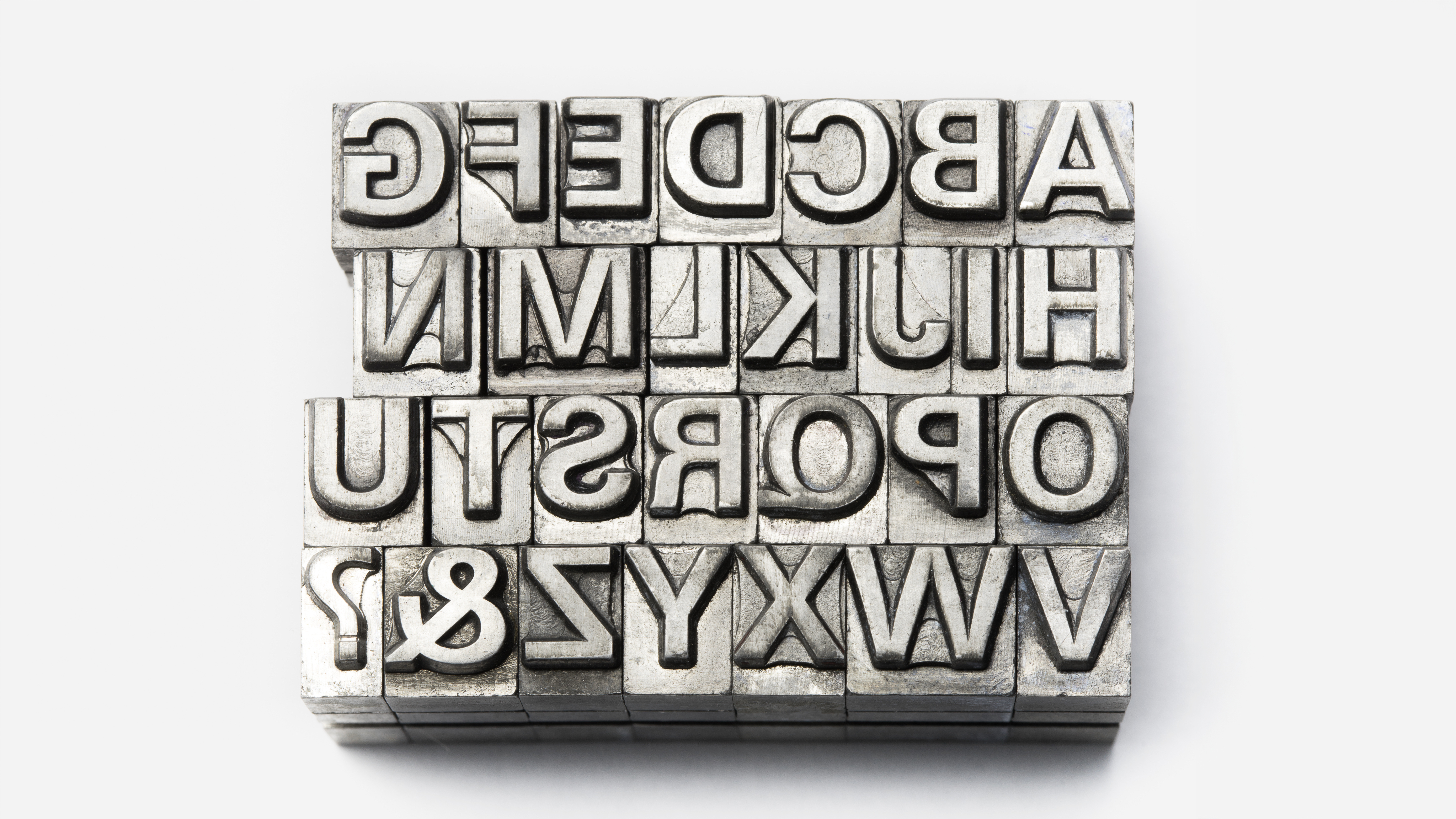
Many early digital fonts were based on reference drawings of punches or smoke proofs – which are clean, high-contrast impressions taken directly from the metal. While they are technically accurate to the metal itself, these sources do not account for how ink actually spreads and bleeds on paper. Consequently, many foundational digital typefaces feel spindly, sharp, and lighter than their designers originally had in mind.
Even after being digitized, compromises often had to be accepted. Digital outline editing was quite primitive, making the correction of errors challenging. In order to build complete font families quickly, foundries often had to fall back on algorithmic treatments – such as generating an artificial oblique rather than digitizing a true italic. Forty years later, many of these compromised digital files remain in active use and will likely never get updated to modern standards.
Why Type Archives Still Matter
Even when looking at those designs that have been evolved, improved, and reissued, many are just pale shadows of their analogue originals. Over the course of repeated iterations and refinements, the spark that made the original design so special has simply been lost.
Looking back at a physical print sample from eighty years ago and seeing a perfectly executed design that clearly outshines its digital versions is deeply inspiring. It makes you want to transport it straight to the modern day, completely bypassing the compromises of the intervening decades. This is the exact philosophy behind The Recast Collection: dedicating the necessary time to plan, research, and execute a typographic rescue mission from history.
Recasting the Past
Our approach ignores the digital file altogether and returns to the source. Our process begins right in the archives with original physical artefacts: printed samples, foundational sketches, and the earliest specimen books.
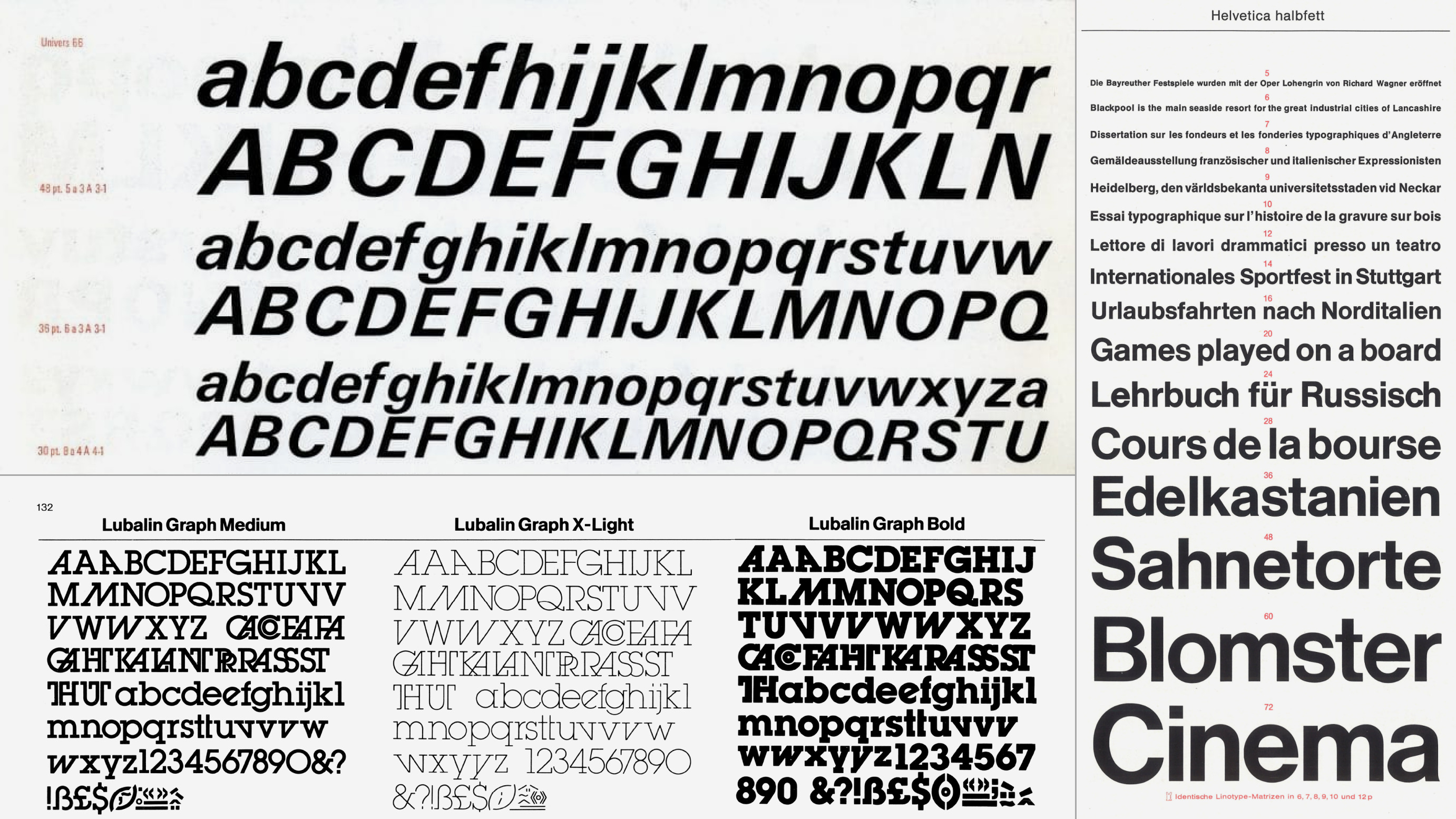
By studying how ink met paper in those original print runs, we are able to capture the warmth, the features, and the familial relationships of the letterforms exactly as intended by the original designer. We take immense pride in this rigorous approach. It is, admittedly, a painstaking process of balancing faithful reinterpretation with historical accuracy, but it remains the only way to uncover the authentic truth of a design.
Expanding a rescued design into a cohesive digital family requires that the original soul is maintained across weights and widths that might not have originally existed in the metal archives. We closely study every single feature of the surviving printed samples to ensure that every new addition feels like a natural, historical sibling that follows the original designer’s logic, rather than just a modern synthetic clone.
Any successful revival must embrace the tension between historical accuracy and modern technical requirements. It has to remain deeply rooted in the past without compromising its utility today.
Varying the Unvariable
Variable fonts dominate the modern font development processes. Combining all possible weights, widths, and styles into a single file is of huge utility, but it introduces a specific challenge for historical revivals: the risk of a sterile, linear result.
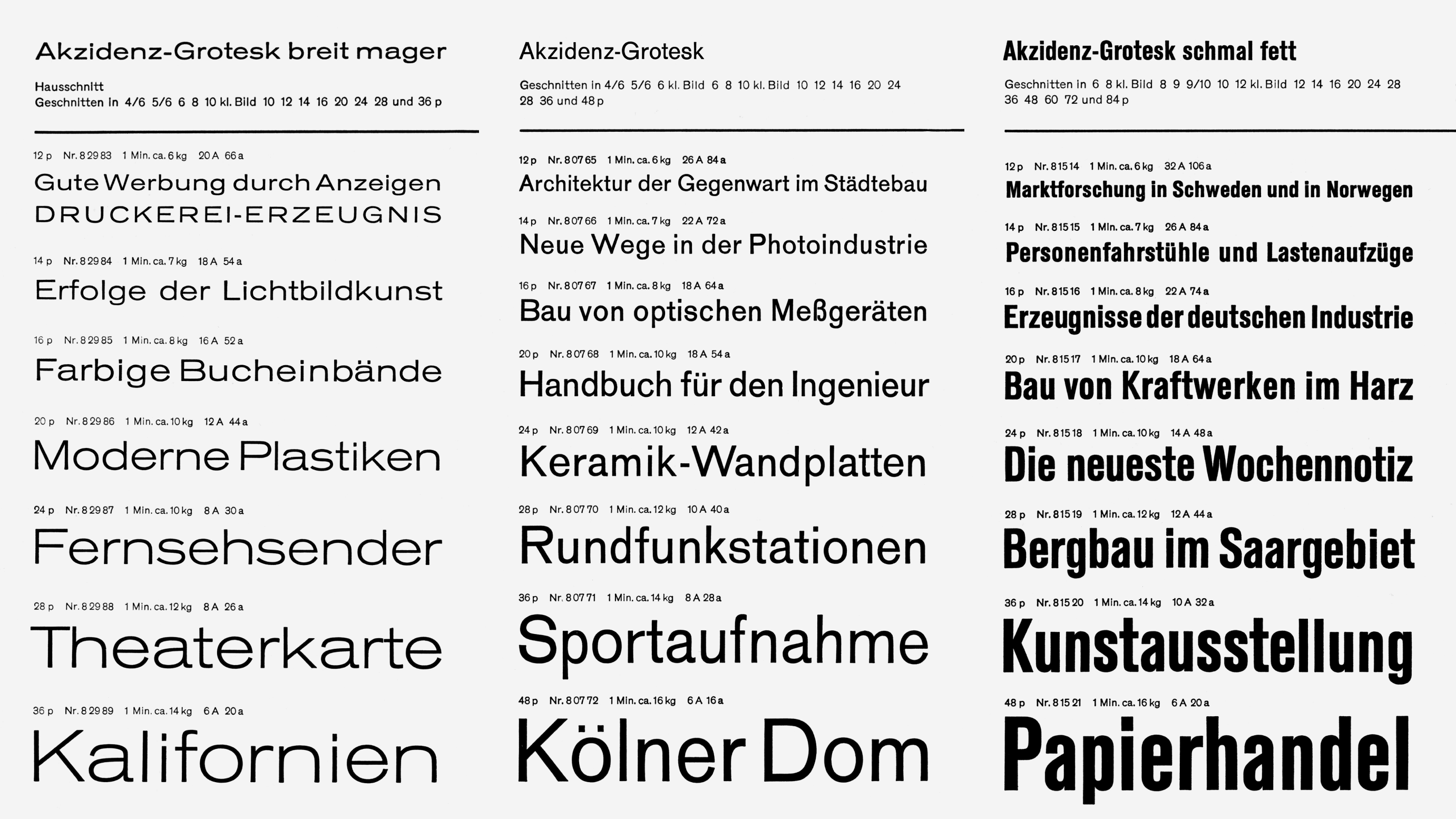
While preserving nuance is central to all of Dalton Maag’s type design, The Recast Collection requires us to go a step further to analyse the original designer’s intent and faithfully execute it in the design space. It is a rigorous and very time-consuming process, but it is the only way to deliver modern utility without sacrificing the true spirit of the original design.
Who Needs Heritage?
For brands seeking to possess genuine historical depth, heritage typography can provide a crucial and authentic human touch. Whether the objective is a global rebrand or a single device interface, integrating a faithful modernization of a classic typeface achieves flawless modern performance without erasing the warmth and integrity of the past.
The selection of the first commissions for The Recast Collection has been driven by our MetricsMatch project. This initiative provides resident fonts that are metrically compatible with industry-standard font sets for manufacturers of printers, televisions, and the like. It is exactly in these technically constrained environments where high-quality, historically grounded design can truly elevate a product.
What’s Next for The Recast Collection
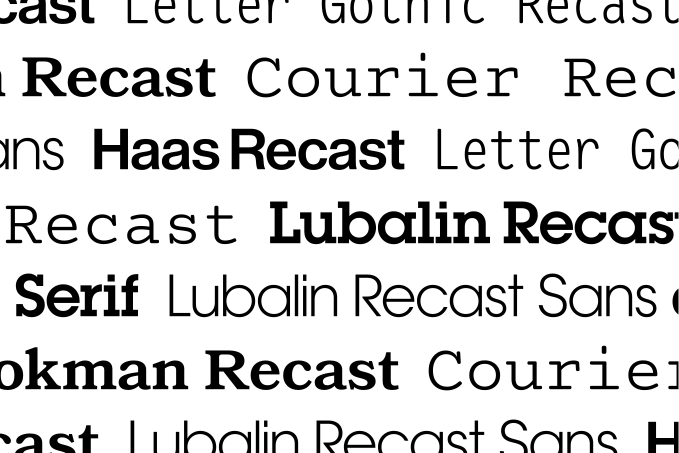
The Recast Collection is our dedicated space for faithful modernizations of deserving classic typefaces – some well-known, others somewhat lost to time. This year, we are focussing on three major releases:
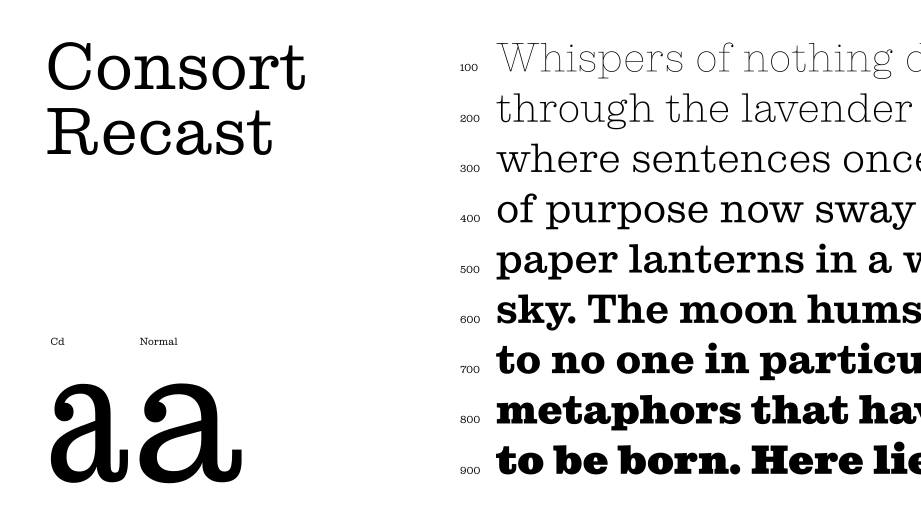
Consort Recast is our faithful revival of a practically forgotten classic. While it is not quite the first digital version, it is the first full weight range, full width range, and first variable font implementation of this 1956 Stephenson Blake classic.
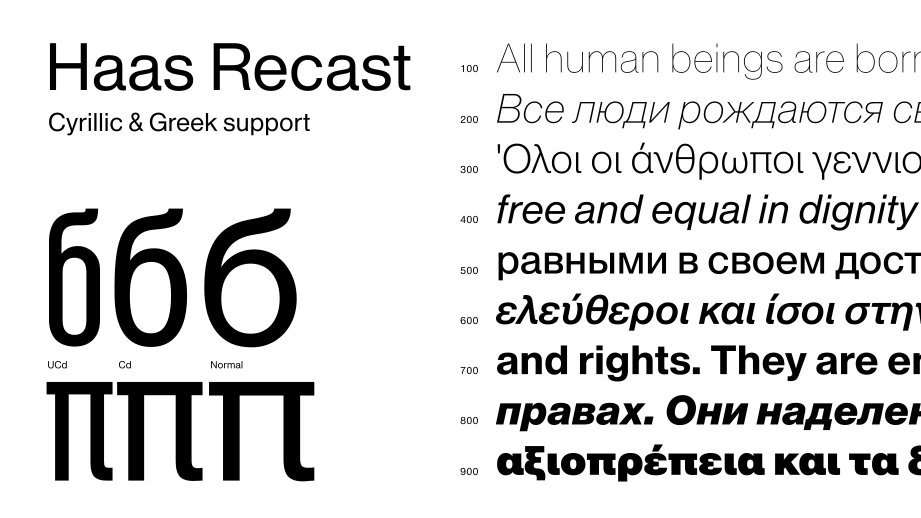
Haas Recast has been hugely popular since its release in 2024, and we are now building on that success by adding Cyrillic and Greek support. While the Latin is based on original 1957 sources, the inspiration for these additional writing systems dates back to sources from the 1960s–1980s.
Copperplate Recast is an ambitious revival of Frederic Goudy’s 1901 classic Copperplate Gothic, with a weight range that pushes the limits of what’s possible for this genre, spanning Hairline to Ultra.
But beyond the finished fonts that you see, our work on faithful revivals is intense and continuous. We will be doing more research into classic designs, building up our reference resources, developing our skills, and refining our processes to deliver on our ambition: providing the definitive version of every deserving classic.
Conclusion
The real reward in this work lies in returning to original samples and rigorously reinterpreting them for a modern audience; careful research is the only valid way to unearth these gems.
Looking backwards is not merely an exercise in nostalgia if the resulting work actively pushes design forward. All stewards of typographic history share a responsibility to ensure that the utility of classic designs does not degrade over time. By returning to paper, we are not just archiving the past – we are actively rebuilding it for the future.
Updates
- The second image caption was updated to clarify the distinction between steel punches and cast metal type.
- Our 2026 plans have changed, and Copperplate Recast has now taken the release slot of our previously announced neo-grotesk revival.




Related Pages
The Recast Collection
MetricsMatch
Font Library